How Many Hours Do Uber Drivers Work Melbourne? A Realistic Breakdown
A realistic breakdown of how many hours Uber drivers in Melbourne typically work each week.
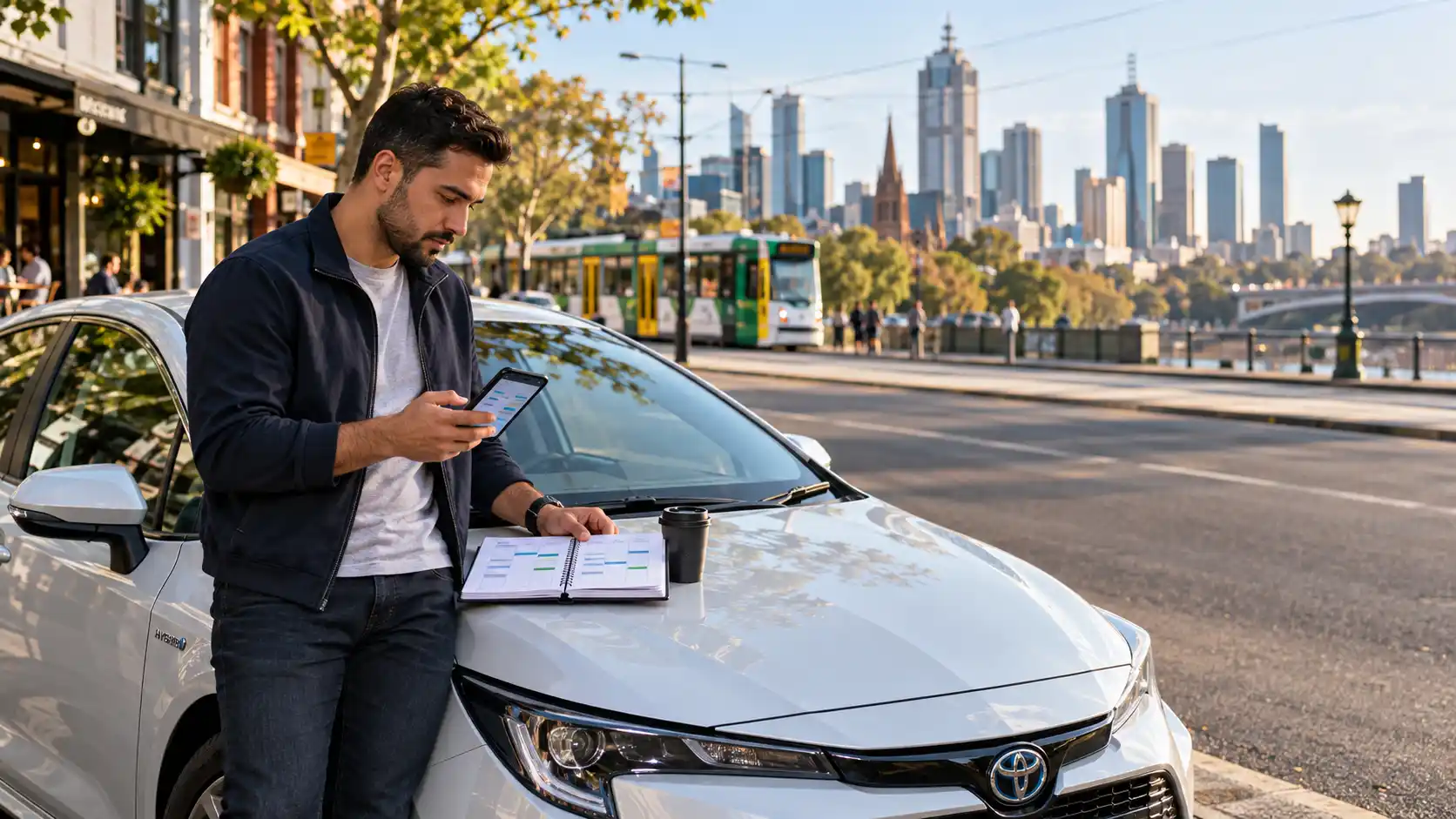
Most Uber drivers in Melbourne drive somewhere between 15 and 40 hours a week, with casual drivers at the lower end and those treating it as a primary income at the higher end. There is no fixed requirement, since Uber driving is flexible by design, but the hours you choose directly affect whether a rental, fuel, and other running costs make sense against what you bring in. A hybrid rental from SOZO Rent a Car in Brunswick is one fixed weekly cost worth measuring your hours against, and this guide shows how.
How many hours do most Uber drivers in Melbourne actually work?
Hours vary enormously by driver intent. Casual drivers topping up other income often drive 5 to 15 hours a week, typically evenings and weekends. Drivers treating rideshare as a part-time job commonly sit around 15 to 25 hours a week. Those using it as a primary income source often push toward 35 to 45 hours, similar to a standard working week, though this is a personal choice rather than any platform requirement. Uber does not publish an official average for Melbourne specifically, so treat any figure, including those here, as a general pattern rather than a fixed statistic.
Full-time vs part-time vs casual patterns
• Casual (5 to 15 hours/week): usually evenings, weekends, or around another job or study commitment, often opportunistic around surge periods.
• Part-time (15 to 25 hours/week): a consistent few shifts a week, often targeting specific peak windows like weekday evening commutes or weekend nights.
• Near full-time (30 to 45 hours/week): structured around daily shifts similar to standard employment, usually by drivers relying on it as a primary income.
What affects how many hours you'll need to drive
• Your target weekly income, since more hours are generally needed to hit a higher target, though not in a straight line given surge and demand variation.
• Time of day and day of week, as peak windows such as weekday commute times and weekend nights tend to pay better per hour than quiet midweek daytime periods.
• Fixed costs you are covering, such as a weekly rental, fuel, and insurance, which set a baseline you need to earn before any hours count as profit.
• Whether you also drive for DiDi or deliver, since some drivers run multiple apps across the same hours to reduce idle time between trips.
Tying your hours to your weekly rental cost
A SOZO Corolla Hybrid works out to about $420 a week, insurance included. Gross hourly earnings for Uber drivers in Australia are widely reported to fall somewhere in the $20 to $35 an hour range before Uber's service fee and running costs, though this varies significantly by city, time of day and demand. Figures here are general market ranges, not a guarantee, and your own earnings will depend on when and where you drive. Treat the table below as an illustration of how hours and rental cost relate, not a forecast.
|
Illustrative gross rate |
Hours to cover a $420/week rental |
Note |
|
$20/hour |
21 hours |
Before fuel, tolls, and Uber's service fee |
|
$25/hour |
17 hours |
Before fuel, tolls, and Uber's service fee |
|
$30/hour |
14 hours |
Before fuel, tolls and Uber's service fee |
These figures are gross, before Uber's service fee, fuel, and tolls, so your real breakeven point sits higher than the hours shown. Use it as a starting framework, then track your own actual earnings per hour over your first couple of weeks to refine it. For a fuller cost comparison against subscription-style providers, see Renting a Car for Uber in Melbourne: Costs, Pros & Cons.
A realistic weekly schedule example
A driver aiming for roughly 20 hours a week might structure it as four weekday evening sessions of around 3 hours each, plus a longer weekend session of 6 to 8 hours covering Friday or Saturday night demand. This spreads hours across a mix of consistent commute-time trips and higher-paying weekend peak periods, rather than driving the same quiet midweek daytime hours every day.
Avoiding driver fatigue over long hours
If you are structuring your week around near full-time hours, build in regular breaks and avoid stacking consecutive late-night shifts, since fatigue affects reaction time in exactly the stop-start, high-attention driving that rideshare work involves. Follow Victorian road rules on rest breaks for any extended driving period, and stop driving if you notice signs of fatigue, regardless of how close you are to a planned finish time.
Working out what makes sense for you
There is no single right number of hours. What matters is whether your planned hours realistically cover your fixed costs, including a rental if you are not driving your own car, with room left over. Check current weekly rental options with SOZO in Brunswick, or call +61 430 090 545 to confirm current pricing before you plan out your weekly hours.
Frequently asked questions
How many hours a week do most Uber drivers in Melbourne work?
It varies widely by intent: casual drivers often work 5 to 15 hours a week, part-time drivers around 15 to 25 hours, and those using it as a primary income often 30 to 45 hours. Uber does not publish an official Melbourne-specific average, so treat these as general patterns rather than a fixed figure.
How many hours do I need to drive to cover a weekly car rental?
It depends on your actual hourly earnings, which vary by time of day and demand. As an illustration, covering a $420 weekly rental might take roughly 14 to 21 hours at a gross rate of $20 to $30 an hour, before fuel, tolls, and Uber's service fee. Track your own numbers over a couple of weeks to refine this.
Is there a minimum or maximum number of hours Uber drivers must work?
No. Uber driving is flexible, with no minimum or maximum hours requirement. You choose when to go online and offline. Some platforms do apply maximum continuous driving time limits for safety, so confirm any current driving-time rules in the Uber Driver app.
What times of day are most worth driving in Melbourne?
Peak windows such as weekday evening commute times and weekend nights tend to offer better earning potential than quiet midweek daytime periods, though this varies by demand on any given day. Many drivers structure their hours around these peak periods rather than spreading evenly across the week.
Should I rent or buy a car if I only plan to drive part-time?
A no-lock-in weekly rental often suits part-time or casual hours better than buying, since you avoid a high upfront cost and ongoing ownership expenses for a car that is not used full-time. You can also stop or adjust easily if your available hours change from week to week.
More Blogs
Best Suburbs in Melbourne for Uber and DiDi Drivers to Start Shifts
A local driver's guide to the best Melbourne suburbs for starting Uber and DiDi shifts.
First Week as an Uber Driver: What to Expect in Melbourne
A realistic, practical guide to your first week driving for Uber in Melbourne.
Uber Green Requirements: Which Hybrid & Electric Cars Qualify
The current, correct Uber Green vehicle requirements for Melbourne, updated for 2026.
